
The UAE elevator market was valued at USD 689.1 million in 2025. The UAE elevator market is projected to reach USD 883.1 million by 2030 at a CAGR of 5.1% (NextMSC Research, February 2026).
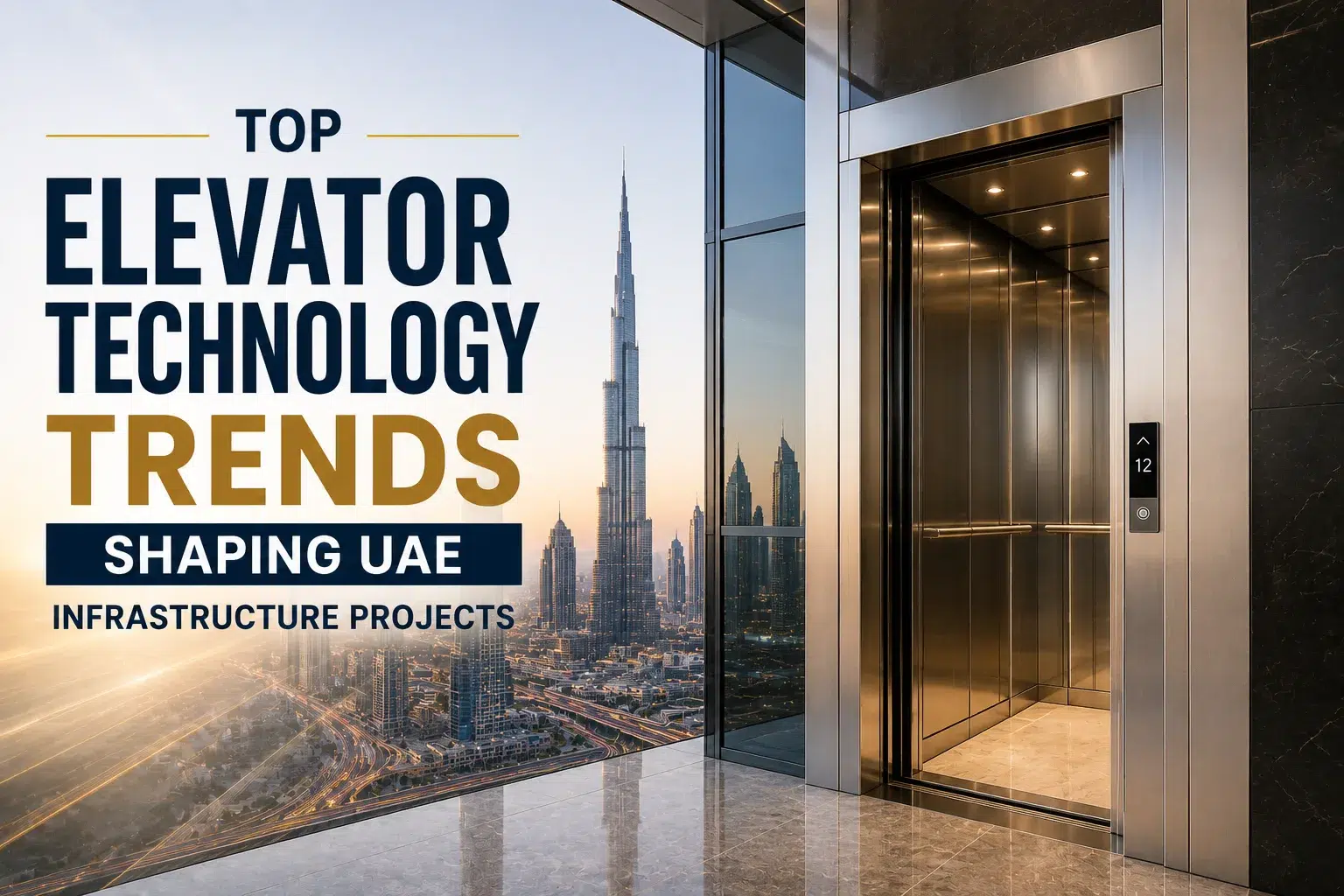
Elevator technology trends UAE developers, architects, and facility managers track in 2026 cover AI performance, IoT connectivity, sustainable elevator technology, and smart city compliance across Dubai, Abu Dhabi, and all seven emirates.
The Growing Importance of Smart Elevator Systems in the UAE
Smart elevator systems are now a baseline requirement in UAE construction – not an optional upgrade. UAE Vision 2031, mega infrastructure growth, and green building mandates all demand connected, energy-efficient vertical transportation.
Rise of High-Rise and Mega Infrastructure Projects
UAE construction is accelerating across all seven emirates in 2026. According to Arizton (May 2025), 10,800 new residential units were delivered across the UAE in 2025. An additional 6,000 residential units are expected across the UAE in 2026.
Projects driving demand for advanced elevator systems UAE-wide:
- Supertall towers in Dubai and Abu Dhabi
- Al Maktoum International Airport expansion
- Mixed-use developments combining hotels, offices, and retail
- Luxury villa communities across Palm Jumeirah and Emirates Hills
UAE Smart City Vision Driving Elevator Innovation
UAE Vision 2031 requires all major building infrastructure to be connected and energy-monitored. Smart building elevators must integrate with Building Management Systems. Smart building elevators must support remote diagnostics. Buildings in DIFC, Saadiyat Island, and government developments without connected elevator data fall short of smart city standards.
Demand for Energy-Efficient Vertical Transportation
Elevators consume 3% to 8% of a building’s total electricity. Dubai Green Building Regulations require documented energy performance from all major building systems. Sustainable elevator technology is now a compliance requirement in LEED Gold and Platinum UAE projects – not an optional specification.
AI-Powered Smart Elevators and Predictive Maintenance
AI-powered smart elevators are transforming UAE buildings by using machine learning to optimize passenger dispatch, detect faults before failure, and reduce energy consumption across commercial and residential developments.
How AI Is Transforming Elevator Operations
AI elevators analyze floor-by-floor traffic patterns continuously. AI elevators pre-position elevator cars before peak demand arrives. Passengers traveling to nearby floors are grouped into one car automatically.
Benefits of AI elevator dispatch in UAE buildings:
- Shorter lobby wait times through pre-positioned car deployment
- Fewer stops per trip through destination-based passenger grouping
- Real-time traffic rebalancing adapting to demand changes all day
Predictive Maintenance Technology
Elevator maintenance technology now uses IoT sensors in motors, doors, and cables. IoT sensors in elevator components transmit live data to AI platforms continuously. KONE’s IoT platform achieved 70% better fault detection and 40% fewer equipment issues through AWS-based AI integration (Plant Services, October 2025).
Benefits for UAE Commercial and Residential Buildings
Smart building elevators connected to AI platforms deliver:
- Fewer emergency breakdowns – faults detected weeks before failure
- Predictable annual maintenance budgets replacing reactive repair cycles
- Longer equipment lifespan through condition-based servicing
Touchless and Contactless Elevator Technology
Touchless elevator technology is growing across UAE buildings because hygiene compliance, smart building integration, and hospitality guest experience standards all make contactless access a standard specification in 2026.
Growing Demand for Hygienic Elevator Solutions
Elevators are among the highest-contact surfaces in shared buildings. Elevator buttons and panels are used hundreds of times daily. In hospitals, hotels, and corporate offices across Dubai and Abu Dhabi, contactless systems are specified as standard in new-build and fit-out projects.
Popular Contactless Elevator Features
Contactless features being installed across UAE projects in 2026:
- Mobile app control – residents call elevators directly from smartphones
- Voice-activated systems – passengers state destination floors without touching buttons
- QR code access – hotel guests authorized to registered floors only
- Facial recognition – deployed in DIFC and Downtown Dubai corporate towers
Applications Across UAE Sectors
- Hotels – VIP floor authorization and concierge app integration
- Hospitals – touchless access in clinical zones reduces cross-infection risk
- Corporate offices – tenant floor restriction via biometric and QR systems
- Luxury residential – mobile app elevator control as standard resident amenity
Destination Control Systems (DCS) Enhancing Building Efficiency
Destination Control Systems improve UAE high-rise efficiency by capturing passenger destination data before any elevator is dispatched – reducing stops per trip, shortening journey times, and lowering energy use per passenger.
What Is a Destination Control System?
A DCS captures each passenger’s destination floor at the lobby panel before any elevator car is dispatched. The system groups all passengers traveling to the same floors into one car simultaneously. Standard Up/Down call buttons collect no destination data before boarding – DCS collects destination data before any car moves.
Advantages of DCS in High-Rise Buildings
- Reduced lobby congestion – cars pre-assigned before boarding eliminates random stop buildup
- Faster passenger movement – fewer stops per trip shortens journey times
- Better energy management – fewer trips per hour reduces electricity draw per passenger
Why DCS Is Becoming Popular in UAE Developments
DCS is a preferred specification in elevator solutions Dubai mixed-use towers are installing in 2026. Buildings above 25 floors in Jumeirah Lake Towers, DIFC, and Business Bay are primary DCS candidates. DCS energy savings contribute directly to LEED and Estidama certification scoring.
What Are The Energy-Efficient and Sustainable Elevator Technologies
The most sustainable elevator technologies for UAE green buildings are regenerative drives, Machine Room-Less elevators, eco-friendly components, and smart energy management – all supporting LEED and Estidama certification.
Regenerative Drive Technology
Regenerative drives capture kinetic energy during elevator descent. Captured kinetic energy converts to electricity inside the drive unit. Converted electricity feeds back into the building’s power grid. Regenerative drives reduce net elevator energy consumption by 30% to 70% depending on building usage.
Machine Room-Less (MRL) Elevators
MRL elevators mount all drive machinery inside the elevator shaft. The dedicated machine room above the shaft is eliminated entirely. Every recovered square meter becomes usable building floor area. MRL elevators comply with Dubai Municipality and DDA requirements for buildings from 5 to 25 floors.
Eco-Friendly Elevator Materials and Components
Sustainable elevator technology in 2026 includes low-emission motors and recyclable cabin materials. Certified global elevator manufacturers now produce components under documented carbon-reduction programs. LED cabin lighting with standby mode functionality reduces continuous electricity draw.
Supporting Green Building Certifications
| Technology | LEED / Estidama Benefit |
| Regenerative drives | Net energy reduction 30-70% |
| MRL gearless motors | Lower operational consumption |
| LED cabin lighting | Reduced electricity draw |
| Standby mode | Eliminates idle energy waste |
| Destination Control System | Fewer trips = lower energy per passenger |
IoT Integration and Smart Building Connectivity
IoT integration connects elevator systems to UAE smart building platforms by embedding sensors in elevator components that send real-time performance data to BMS dashboards continuously.
Role of IoT in Modern Elevator Systems
IoT sensors monitor critical elevator components and generate actionable data in real time:
- Motor temperature – flags overheating before failure occurs
- Door cycle counts – detects mechanical wear on door systems early
- Guide rail vibration – identifies alignment issues before faults develop
- Cable tension – monitors the most safety-critical elevator component
Integration with Building Management Systems (BMS)
BMS platforms in UAE commercial and hospitality projects receive elevator IoT data directly. Facility managers see HVAC, lighting, access control, and elevator performance in one unified view. Hotel operators across Dubai, Abu Dhabi, and Ras Al Khaimah monitor all elevator systems from a single dashboard.
Benefits for Property Owners and Facility Managers
- Lower maintenance costs – condition-based servicing reduces unnecessary visits
- Live operational visibility – dashboards show every elevator’s real-time status
- LEED-ready energy logs – usage data available for certification audits on demand
- Dubai Municipality compliance records – full audit trail maintained automatically
High-Speed Elevators for UAE Skyscrapers
High-speed elevators for UAE skyscrapers travel at 4 meters per second or faster – a technical necessity for buildings above 30 floors in Dubai and Abu Dhabi where standard speeds create unacceptable wait times.
Demand for Faster Vertical Mobility
Standard elevator speeds range from 1.5 to 2.5 meters per second. The ground-to-top journey in a 60-floor Dubai tower takes over two minutes at standard speed. At 8 meters per second, elevator solutions Dubai skyscraper developers specify reduce that same journey to under 30 seconds.
Advanced Speed and Safety Technologies
High-speed elevators UAE skyscrapers install combine three core engineering systems:
- Pressurized cab sealing – equalizes cabin air pressure, eliminating ear discomfort above 6 m/s
- Aerodynamic cab design – reduces wind resistance and shaft noise at high speeds
- Smart braking systems – smooth, precise deceleration at every floor regardless of speed
Improving Passenger Comfort in High-Speed Travel
Noise reduction panels absorb shaft sound at high elevator speeds. Vibration-damping guide rail mounts remove lateral cabin movement. Smart acceleration curves eliminate abrupt starts and stops at 8 meters per second.
Enhanced Elevator Safety and Security Innovations
UAE elevator systems in 2026 use biometric access control, integrated CCTV, automated emergency response, and cybersecurity protocols – meeting Dubai Municipality, DDA, and UAE Civil Defense compliance requirements.
Smart Surveillance and Access Control
Biometric systems restrict elevator access by floor and user profile. Residents access only registered residential floors. Employees reach only authorized workplace floors. CCTV inside elevator cabs is a Dubai Municipality requirement for commercial and residential buildings above minimum height thresholds.
Emergency Response and Rescue Technologies
UAE Civil Defense regulations require elevators to integrate with building fire alarm systems. When a fire alarm activates, elevators return automatically to the designated evacuation floor — called Phase 1 Fire Service Operation. Earthquake response protocols detect seismic signals and return elevator cars safely to the nearest floor before stopping.
Cybersecurity in Connected Elevator Systems
Smart building elevators connected to IoT and BMS networks create digital access points. Digital access points in connected elevator systems require active cybersecurity management. Secure firmware protocols, encrypted data transmission, and restricted network access are standard specifications for government buildings and hospitals across Dubai and Abu Dhabi.
What Are The Custom Elevator Design Trends in Luxury UAE Developments
Custom elevator design trends in UAE luxury developments treat the elevator cabin as a premium architectural element – with glass panels, bespoke finishes, personalized lighting, and digital displays matched to each building’s identity.
Premium Interior and Aesthetic Innovations
Glass elevators are a signature feature in UAE villa compounds, boutique hotels, and luxury retail environments. Premium elevator cabin specifications in 2026 include:
- Natural stone flooring in ultra-luxury residential projects
- Brushed stainless steel panels for contemporary commercial interiors
- Backlit ceiling systems with programmable warm-to-cool lighting
Smart User Experience Features
Interactive touchscreen panels replace traditional button arrays in luxury elevator installations. Voice control allows destination floor selection without touching a button. Bluetooth-based floor access is active in UAE ultra-luxury residential projects in 2026.
Elevator Customization for Hospitality and Retail Projects
Hotels on Palm Jumeirah specify elevator cabin materials, lighting, and colour palettes aligned to brand guidelines. VIP access elevators – reserved for premium guests – are active in 5-star hotels and ultra-luxury towers across Downtown Dubai and Abu Dhabi’s Corniche.
What is The Future of Elevator Technology in UAE Infrastructure
The future of elevator technology in UAE infrastructure includes autonomous AI management, multi-directional shafts, smart mobility network integration, and zero-carbon elevator certifications – aligned to the UAE’s Net Zero by 2050 commitment.
Autonomous and Robotic Elevator Concepts
Advanced elevator control systems are expected to become more common in commercial buildings from 2026. AI handles all dispatch, maintenance scheduling, and routing without human input. Autonomous delivery robots in UAE hospitals and logistics facilities call elevators and travel between floors independently.
Integration with Smart Mobility Ecosystems
Elevators in mixed-use developments near Dubai Metro stations will synchronize with transit demand data in real time. Elevator cars pre-position for incoming passenger surges from Dubai Metro arrivals before trains reach connected stations.
Expected Innovations in the Next Decade
Elevator technology innovations expected in UAE infrastructure by 2035:
- Hyper-efficient regenerative systems recovering over 80% of elevator energy
- AI maintenance platforms predicting component failures 30 to 90 days in advance
- Multi-directional shafts enabling horizontal and vertical travel in large developments
- Zero-carbon elevator certifications becoming mandatory in UAE green building projects
How to Choose the Right Elevator Technology Partner in the UAE
The right elevator technology partner in the UAE holds verified Dubai Municipality and DDA compliance credentials, delivers full-lifecycle service across all seven emirates, and specifies elevator systems matched to each project’s exact requirements.
Key Factors to Consider
Non-negotiable criteria when evaluating UAE elevator partners in 2026:
- UAE regulatory compliance – Dubai Municipality and DDA approval for installation and maintenance
- Full lifecycle capability – installation, maintenance, and elevator modernization UAE buildings need under one provider
- Emirates-wide coverage – active service across all seven emirates
- Verified sector experience – commercial, residential, hospitality, and healthcare track record
Importance of Custom Solutions
No two UAE projects share identical elevator requirements. A 60-floor DIFC tower needs different advanced elevator systems UAE specifications than a Palm Jumeirah villa. An Abu Dhabi hospital needs a different elevator specification than either. Custom-specified elevator solutions outperform generic procurement on performance and total lifecycle cost.
Long-Term Value and Operational Efficiency
Elevator modernization UAE building owners are choosing extends equipment life by 15 to 20 years. Elevator modernization brings systems to current DDA and Dubai Municipality compliance standards. Elevator modernization adds IoT-connected elevator maintenance technology to aging buildings. York Lift has delivered elevator installation, modernization, and maintenance across all seven emirates for over 21 years.
Elevator technology in the UAE is advancing at a pace that matches the country’s infrastructure ambitions. Smart elevators UAE buildings now demand – AI-powered maintenance, destination control systems, regenerative energy technology, and touchless access – are baseline requirements in every serious UAE development, not future-facing aspirations.
The right elevator technology partner brings the expertise to specify the right system, install it correctly, and maintain it reliably for the life of the building.
York Lift, one of the best elevator companies in UAE, has served the UAE market for over 21 years. The company operates across all 7 emirates, partners with world-class elevator manufacturers, and provides complete project support from specification through installation and long-term maintenance.
Here is what York Lift delivers across every project type in the UAE:
- AI-assisted maintenance and remote monitoring
- Touchless elevator systems
- Destination Control System (DCS) installation
- IoT monitoring support
- High-speed elevator specification
- Cybersecurity provisions
- Full cabin customisation
- Traffic analysis and site assessments
- Touchless elevator solutions Supply